

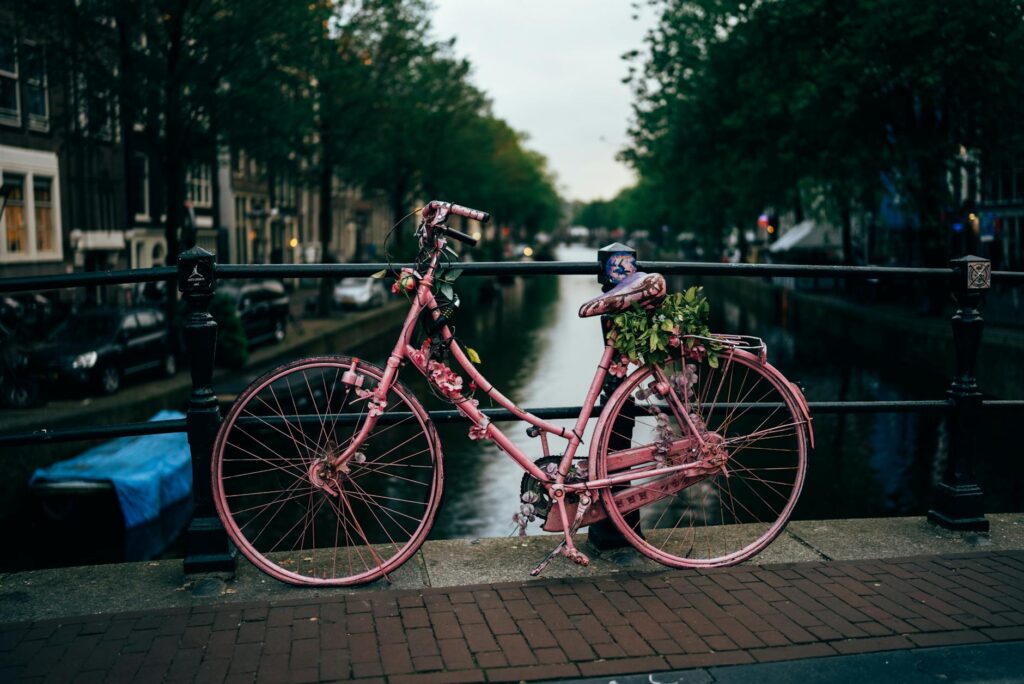
5 Amsterdam Bike Hacks Even Locals Don’t Know
5 Amsterdam Bike Hacks Even Locals Don’t Know
Skip the tourist traps. Ride like a Dutch person — and never pay for parking again.
Amsterdam has 880,000 bikes and only 17,000 official parking spots. That’s 50 bikes per spot. Chaos? Only if you don’t know the rules.
Here are 5 hacks we use every week — and yes, we live here.
1. The “Ghost Lock” Trick
OV-fiets stations have free locks. Borrow one, lock your bike anywhere, return it later. €0 parking. Works at 300+ stations.
2. The Secret Bike Path Behind Central Station
Enter via the ferry tunnel. No tourists. No traffic lights. 2 minutes from Dam Square to Noord. Shaves 12 minutes off your ride.
3. The €1/Day Bike Share App
Use Donkey Republic. Orange bikes. €1/day. No deposit. Drop anywhere in the city.
- Download app
- Scan QR
- Ride
4. The “Bakfiets” Grocery Hack
Rent a cargo bike for €10/day at MacBike. Fit 6 bags of groceries. Return it full of stroopwafels.
5. The Midnight Bike Ferry
Free ferry from NDSM to Central runs 24/7. Bring your bike. Avoid the 30-minute detour through IJtunnel.
“I saved €120 in parking in one month.”
— Sofia, Jurnjoy designer

Ready to Ride Amsterdam?
Get the full printable guide — bike-safe, rain-proof, €3.


What to Pack and Practical Preparation
Pack layers regardless of season. European weather shifts quickly, and the temperature difference between a sunny square and a shaded cathedral interior can be 10-15°C. A compact rain jacket that doubles as a windbreaker is the single most useful garment for European travel.
Bring a portable charger and a universal EU adapter (Type C/F for most of Europe, Type G for the UK). Many older European buildings and hotels have limited outlet access in rooms, so being able to charge on the go keeps your phone available for maps, translations, and reservations.
Notify your bank before traveling and carry a small amount of local currency for markets, small shops, and tipping. While card payment is widespread in Northern Europe, Southern and Eastern European destinations still have many cash-preferred establishments, especially street food vendors and local transport ticket machines.
Frequently Asked Questions
Is it safe to cycle in Amsterdam as a tourist?
Yes, Amsterdam’s cycling infrastructure is world-class with dedicated bike lanes on nearly every street. The main risks come from tram tracks (cross them at an angle) and other cyclists. Stick to the marked bike lanes and always signal before turning.
Where can I rent a bike in Amsterdam?
Skip the tourist rental shops near Centraal Station — they charge €15-20/day. Instead, use Swapfiets (monthly subscription from €16.50) or MacBike locations in residential areas where daily rates are lower. Many hotels also offer free or discounted bike rentals.
What are the unwritten cycling rules in Amsterdam?
Never stop in a bike lane, always use hand signals, ring your bell when passing, and stay right except when overtaking. Never cycle on sidewalks, and lock your bike with both the built-in wheel lock and a chain lock through the frame.
Insider Tips You Won’t Find in Guidebooks
The best travel experiences come from stepping off the well-worn tourist path. Local markets open early — arriving before 9 AM gives you the freshest produce and the most authentic interactions with vendors who haven’t yet switched into tourist mode.
Download the city’s local transit app before you arrive. In most European cities, a daily transit pass costs less than two taxi rides and gives you unlimited access to buses, trams, and metro lines. Google Maps transit directions are accurate but local apps often show real-time delays and platform changes that Google misses.
For restaurants, follow the locals’ schedule. Lunch between 12-2 PM at places where you hear the local language spoken is almost always better and cheaper than dinner at tourist-facing establishments. Many restaurants offer fixed-price lunch menus (menu del día in Spain, formule in France) that include multiple courses at half the dinner price.
Insider Tips You Won’t Find in Guidebooks
The best travel experiences come from stepping off the well-worn tourist path. Local markets open early — arriving before 9 AM gives you the freshest produce and the most authentic interactions with vendors who haven’t yet switched into tourist mode.
Download the city’s local transit app before you arrive. In most European cities, a daily transit pass costs less than two taxi rides and gives you unlimited access to buses, trams, and metro lines. Google Maps transit directions are accurate but local apps often show real-time delays and platform changes that Google misses.
For restaurants, follow the locals’ schedule. Lunch between 12-2 PM at places where you hear the local language spoken is almost always better and cheaper than dinner at tourist-facing establishments. Many restaurants offer fixed-price lunch menus (menu del día in Spain, formule in France) that include multiple courses at half the dinner price.